This is the fifth lesson in the first module of the EUPress teacher training led by Professor Fabio Masini on the creation of the EU single market.
The creation of the euro — Europe’s single currency — was not merely an economic event but a profoundly political milestone. As Lesson 1.5 illustrates, its birth emerged from a convergence of global shifts, domestic anxieties, and high-stakes bargaining among European leaders in the late 20th century.
A changing world, a window of opportunity
In the 1980s, the geopolitical landscape was shifting. The Soviet Union was collapsing under the reformist wave of Gorbachev’s perestroika and glasnost, culminating in the fall of the Berlin Wall in 1989. This historic moment opened new possibilities for European unity, alongside uncertainties about Germany’s reunification and future power balance.
Sensing the need for stronger integration, Jacques Delors, President of the European Commission, convened a committee to outline a roadmap for Economic and Monetary Union (EMU). The draft was led by Italian economist Tommaso Padoa-Schioppa, who articulated the logic behind shared monetary sovereignty — a direct continuation of the failed Werner Report of 1969.
A political trade: the euro for German reunification
As Germany prepared to reunite, its European partners sought guarantees that its economic and political influence would be tied to European institutions. But the Bundesbank, shaped by the trauma of 1920s hyperinflation, was deeply cautious about relinquishing monetary sovereignty.
The compromise was clear:
- Germany accepted the creation of the euro.
- Europe agreed to strict fiscal rules to prevent inflationary drift.
These rules were enshrined in the Maastricht Treaty (1992):
- Public deficit ≤ 3% of GDP
- Public debt ≤ 60% of GDP
- Convergence in inflation and interest rates
This pact led to a paradox: monetary union without true economic union. While the ECB became a federal institution capable of majority voting, the economic side — taxation, public spending, industrial policy — remained largely national.
A forgotten blueprint: Delors’ 1993 White Paper
Before the euro was launched, Delors made one last attempt to steer Europe toward a sustainable economic future. His 1993 White Paper proposed a collective investment strategy in:
- Green technologies
- Digital transformation
- Education and critical infrastructure
He also suggested market-based financing through eurobonds — an idea nearly identical to today’s NextGenerationEU plan. The proposal was unanimously approved… and then shelved. Europe would wait 30 years, and a pandemic, to revisit it.
The euro arrives — twice
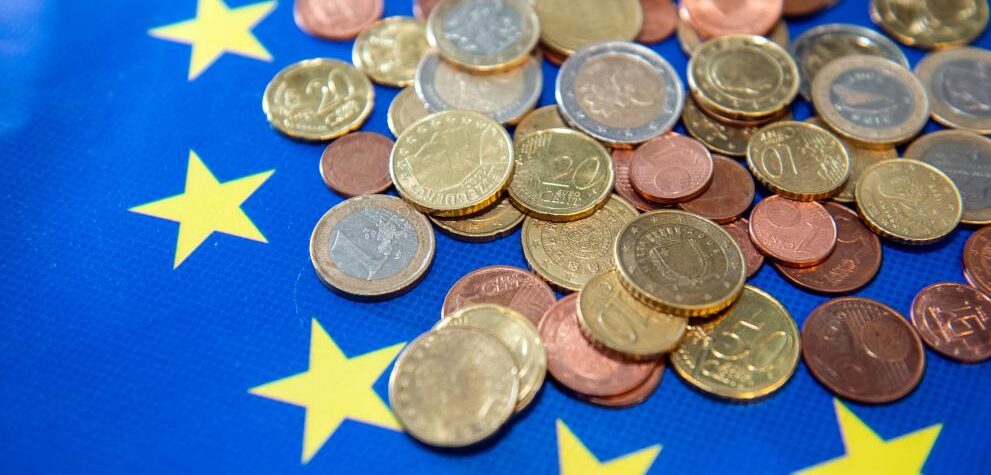
- January 1, 1999: The euro was born as a virtual currency, used for financial transactions and accounting.
- January 1, 2002: Euro banknotes and coins entered circulation.
This 3-year gap would later create confusion — and fuel anti-euro narratives for those who blamed post-2002 price hikes on the new currency rather than earlier inflation and inadequate oversight.
The price of convergence
Member states undertook major efforts to meet Maastricht criteria. Italy, for example, introduced a one-time “Euro Tax” in 1997 under Prime Minister Romani Prodi. While the tax was later refunded due to falling interest rates, its perception symbolized the sacrifices made in the name of Europe.
The Stability and Growth Pact: discipline as destiny
Just before the euro launch, the Stability and Growth Pact (1997) made Maastricht’s convergence rules permanent. It created a long-term framework tying fiscal policy to shared monetary sovereignty — a constraint that would create enormous political and economic tension during future crises.
The euro was born from an extraordinary deal: shared money in exchange for shared discipline, but without shared politics. Its architecture embedded both integration and imbalance — a legacy that would eventually shape the EU’s response to the financial crisis, the rise of populism, and the debate on Europe’s economic future.